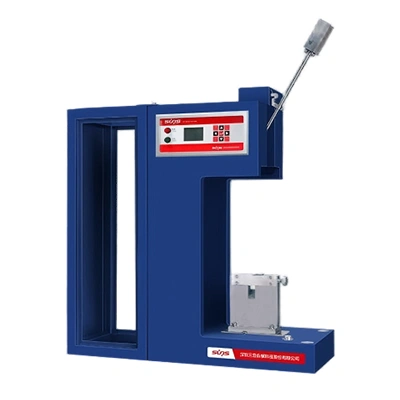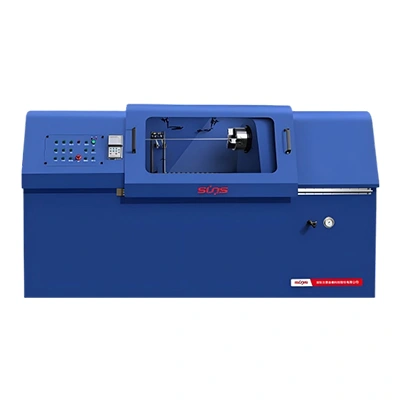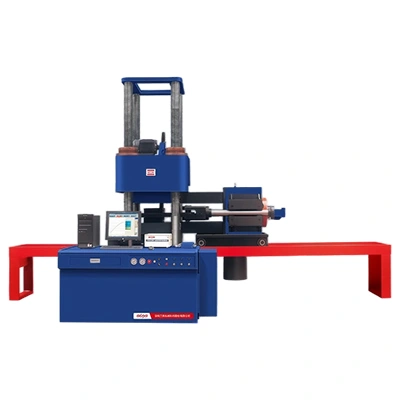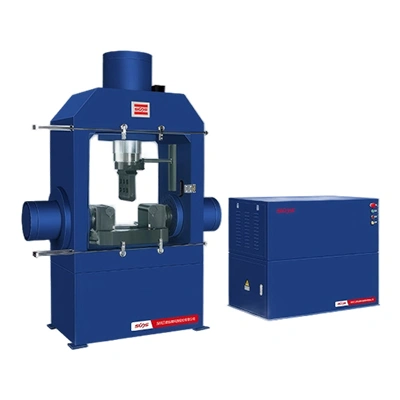
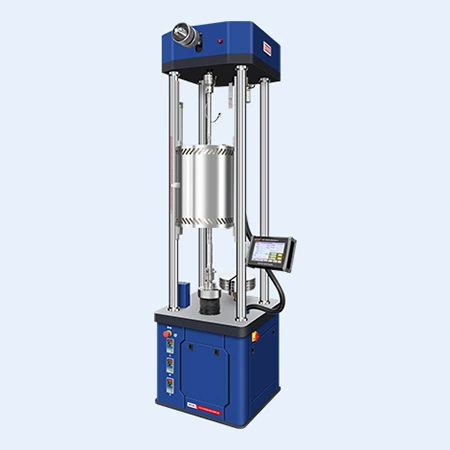
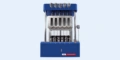
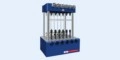
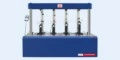
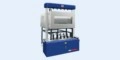
CTM Series (30kN-100kN)
Creep & Stress Rupture Testing Machine
- GB/T 2039, GB/T 38822, GB/T 15248, GB/T 2611, GB/T 6398
- ASTM E139-19, ASTM E2714-13, ASTM E2092, ASTM E647
- ISO 7500-1, ISO 204
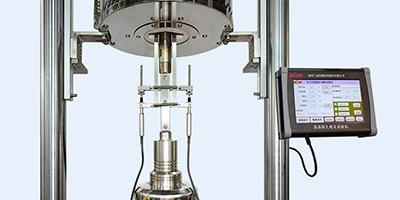
Creep and stress rupture testing machines show the way in which materials change when they are left under a load for long times, particularly at higher temperatures. In a creep test the force applied remains constant as the material being tested deforms slowly; a stress rupture test is carried on until the specimen breaks and notes the length of time it survives. Creep testing systems can also be used to measure stress relaxation by keeping the specimen at a fixed deformation and then observing the decrease in stress over time.
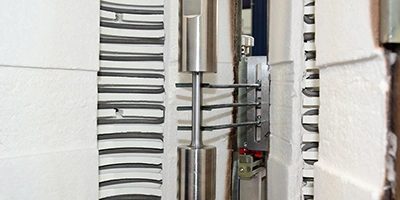
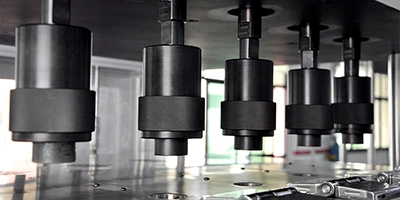
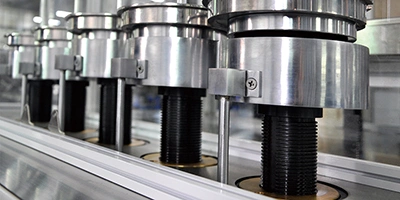
Our creep testing machines can apply forces ranging from 200 N to 100 kN and can operate at temperatures from room temperature up to 1600°C; they feature servo load control which ensures that the force remains constant over the course of long tests, and their multi-station design enables a number of specimens to be tested at the same time. Their ability to maintain a constant force over long test periods is suitable for applications in power generation, nuclear engineering, and heavy industry, where creep and stress rupture tests evaluate boiler pipes, nuclear components, and other heavy-duty parts under GB/T, ISO, or ASTM standards.
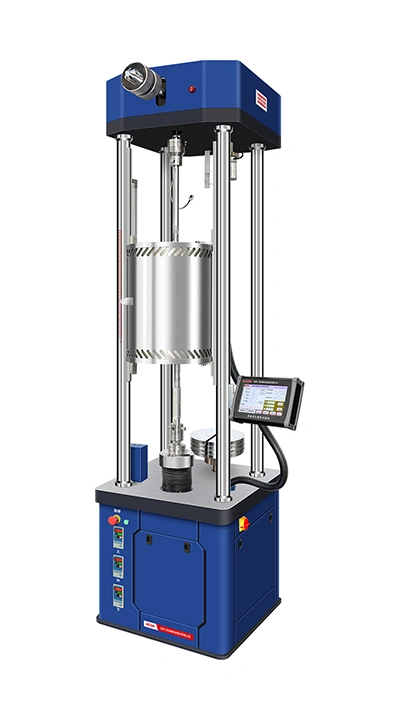
Specifications of CTM-A Series
| Model | | | | |
| Max. Force | 30kN | 50kN | 80kN | 100kN |
| Min. Force | 300N | 500N | 800N | 1,000N |
| Accuracy | ≤0.5% | |||
| Min.Weight | 1N | |||
| Leveling Mode | Automatic balance adjustment with high leveling accuracy, excellent reliability and stability. | |||
| Automatic Leveling Range | ±0.1mm(Specimen deformation) | |||
| Lever Stage Number | 1 | 2 | ||
| Lever Ratio | 1:50 | |||
| Lower Pull Rod Speed | 2mm/min-50mm/min | |||
| Lever Leveling Speed | 2mm/min | |||
| Lower Pull Rod Stroke | 0-200mm | |||
| Coaxiality | ≤5% | |||
| Load Monitoring System | It can monitor the force applied to the specimen during loading, preventing the loaded weights from exceeding or falling below the set value. | |||
| Load Monitoring Measuring Range | 1% -100%FS | |||
| Relative Variation of Load Monitoring Indicated Value | ±0.5% | |||
| Manual Unloading Mechanism | Equipped with a manual adjustment mechanism, which enables unloading in the event of an unexpected power failure, effectively protecting the machine and the specimen under test. | |||
| Timing Error | ±0.1% | |||
| Power Supply | 380V±10%; 50Hz | |||
| Power | 0.4kW | 0.75kW | ||
| Dimensions(mm) (L×W×H) | 760×670×2,500 | 980×670×2,600 | ||
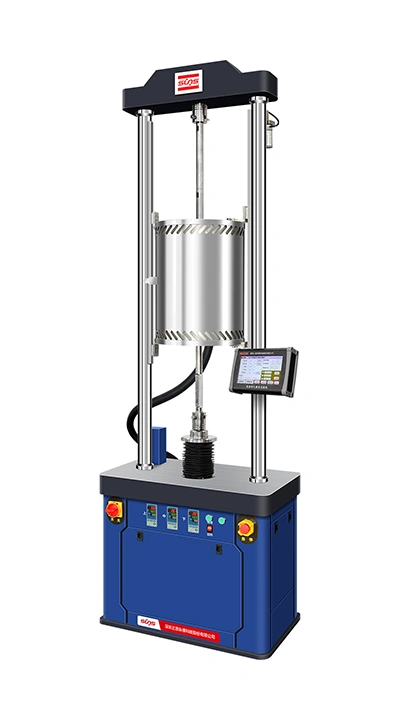
Specifications of CTM-B Series
| Model | | | | |
| Max. Force | 30kN | 50kN | 80kN | 100kN |
| Min. Force | 120N | 200N | 320N | 400N |
| Accuracy | ≤0.5% | |||
| Resolution of Force | 1/500000F.S. | |||
| Lower Pull Rod Speed | 0.5-100mm/min | |||
| Lower Pull Rod Stroke | 0-200mm | |||
| Coaxiality | ≤5% | |||
| Manual Unloading Mechanism | In case of unloading during unexpected power outages, it can effectively protect both the machine and the test sample. | |||
| Timing Error | ±0.1% | |||
| Power Supply | 380V ± 10%;50Hz ±2% | |||
| Power | 0.85kW | 1.3kW | ||
| Dimensions (mm) | 850×560×2,500(L×W×H) | |||
Our creep testing machines are available in two configurations: the CTM-A models employ dead-weight loading and the CTM-B models use a motor-driven mechanism for applying the load. Each creep tester can be set up with the required furnace, extensometer, control arrangement, and test mode:
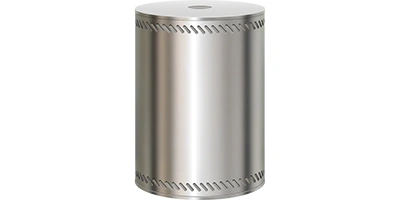
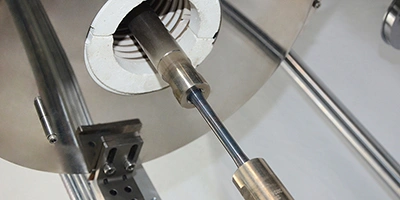
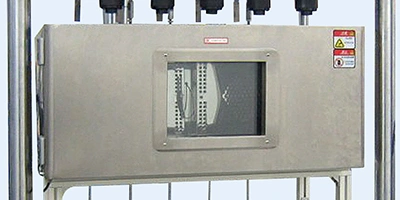
- Split or fully enclosed high-temperature furnaces
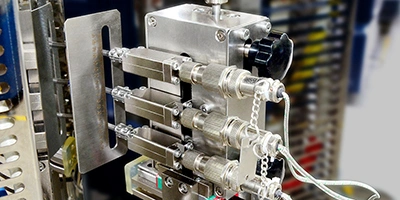
- Contact, rod-type, and non-contact video extensometers
- Integrated software that operates several test frames independently and simultaneously from one computer
- Static creep and stress rupture testing, as well as high-temperature creep-fatigue testing under dynamic loads
Throughout each creep test, the software tracks force, deformation, temperature, and elapsed time to determine creep limit and stress rupture strength. The test material range covers metals such as superalloys, stainless steel, nickel-based and titanium alloys, and alloys based on iron, copper, aluminum, or magnesium; composites reinforced with carbon fiber or glass fiber, as well as ceramic-matrix and resin-matrix composites; and specialized alloys and coatings such as nickel-based single-crystal alloys, chromium-coated zirconium alloys, and thermal barrier coatings (TBCs).