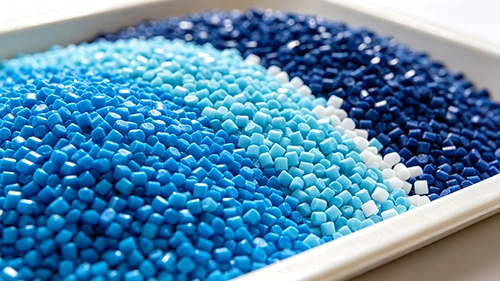
Plastic Testing Equipment
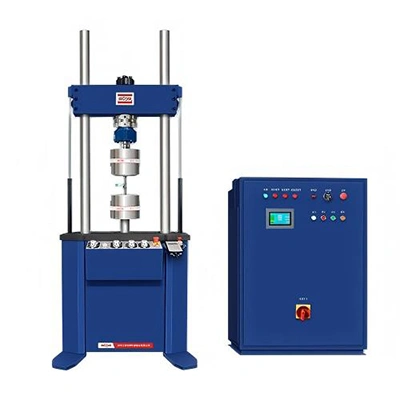
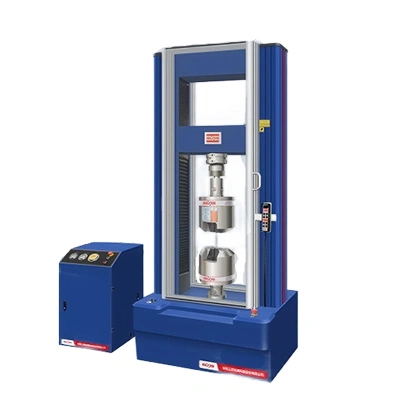
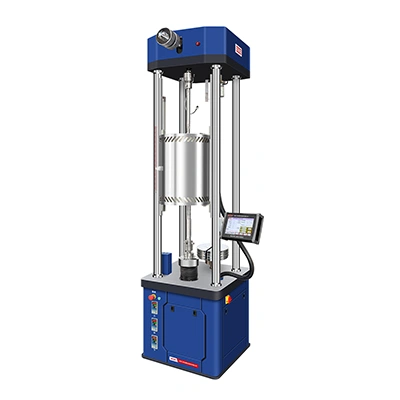
Our plastic testing equipment assesses impact resistance, melt flow, and thermal performance during material development, product evaluation, and quality control. Available systems include pendulum and multiaxial impact testers, as well as instruments that measure melt mass-flow rate (MFR), melt volume-flow rate (MVR), heat deflection temperature (HDT), and Vicat softening temperature (VST).
The DTM series Charpy and Izod impact testing machines and the PTM series falling-ball and multiaxial impact testing machines cover impact energies from 1 to 400 J across the available models. Both series of testing machines can perfom room-temperature and low-temperature testing, while instrumented configurations record the test data needed to assess impact strength, fracture behavior, and absorbed energy. Charpy and Izod tests use pendulum impact, whereas falling-ball and multiaxial tests apply impact to a larger area of the specimen.
| Material | Typical Tests | Recommended Equipment |
| Plastic Products | Flexural Testing | Electromechanical Universal Testing Machine, UTM6000 |
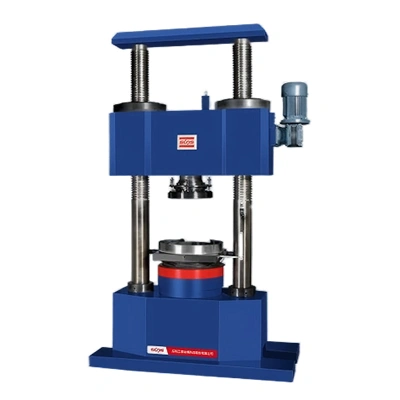
| Plastic Pipes | Ring Stiffness Testing | Ring Stiffness Testing Machine |
| Rigid Cellular Plastics | Compression Testing | Electromechanical Universal Testing Machine, UTM4000 |
| Rigid Thermosetting Molding Materials | Impact Strength Testing | Charpy & Izod Pendulum Impact Tester for Plastic |
| Plastic Products | Tensile Testing | Electromechanical Universal Testing Machine, UTM4000 |
The MTM 2000 series melt flow rate testers measure MFR and MVR under controlled temperature and load conditions to show how easily molten thermoplastics flow. The VTM 2000 series heat deflection and Vicat softening temperature testers measure HDT and VST to determine how thermoplastics respond to heat and when they begin to soften or deform. These plastic testing systems can meet relevant GB/T, ISO, ASTM, and other industry standards for plastics research, development, production, and quality control in the automotive, packaging, electronics, and home appliance industries.
- Dedicated Impact Testing for Different Requirements
The DTM series is used for carrying out impact strength tests on standard plastic specimens, whereas the PTM Series simulates multi-axial impact conditions more closely resembling those experienced by finished plastic products. Together, these systems carry out impact testing from the stage of material development right through to production testing. - Precise Temperature Control for Melt Flow Testing
The copper furnace chamber used in the MTM series has a larger outer diameter in order to achieve a more uniform barrel temperature. The PID closed-loop temperature control maintains the conditions needed for melt flow testing according to ISO 1133, ASTM D1238 and other applicable standards. - HDT & Vicat Testing in One System
The VTM Series performs both heat deflection temperature (HDT) and Vicat softening temperature (VST) tests. Each channel has its own PT100 temperature sensor to ensure accurate measurements and reliable results. - Instrumented Impact Data
Besides measuring impact energy, instrumented testing also records impact force versus displacement and fracture details. This gives a clearer picture of how plastics react and fail under impact, helping with material design and performance checks. - 20+ Pre-Programmed Impact Standards
More than 20 plastic impact testing standards are built into the system, including GB/T 1043, ISO 179, ASTM D256 and ASTM D3763, making it easier to set up for different test methods and requirements. - Efficient, Safer Batch Testing
Automatic specimen feeding increases efficiency for repetitive batch testing. An explosion-proof protective structure contains plastic fragments produced by the impact so that there is a lower chance of them being thrown into the surrounding work area.
- Home Appliances: Charpy impact testing of ABS housings and panels in accordance with GB/T 1043, and Izod testing is performed on PP components such as drawer guide rails to evaluate resistance to impact when in use.
- Automotive Interiors: The impact testing of PVC dashboard skins and PA66 fasteners for automotive interiors in accordance with ASTM D256 should include an assessment of their low-temperature crack resistance.
- Plastic Profiles & Pipes: Charpy impact testing of PVC door and window profiles and PE pipes according to ISO 179 to assess resistance to impact during installation and use.
- Packaging: Falling-ball impact testing of PET bottles and multi-axial impact testing of PE cushioning films to evaluate resistance to drops and impact during transportation.
- Automotive Exteriors: Multi-axial impact testing of PP bumpers according to ISO 6603-2 and falling-ball testing of PC lamp housings to evaluate damage resistance under impact.
- Electronics: Falling-ball testing of PC laptop housings and multi-axial impact testing of TPU phone cases to assess drop and impact resistance.
- Raw Material Quality Control: Measure MFR and MVR of PE, PP, ABS, PC and other thermoplastics regarding the quality of the raw materials.
- Process Optimization: Compare melt flow under different temperatures and loads to determine suitable parameters for injection molding, extrusion and blow molding.
- Material Development & Modification: Evaluate how plasticizers, fillers, blends and other formulation changes affect processing flow during the development of engineering and biodegradable plastics.
- Compliance Testing: Perform MFR/MVR testing according to ISO 1133, ASTM D1238, GB/T 3682 and any other relevant standards for the manufacturer's quality control, for third-party inspection and for research.
- Heat Resistance Classification: Determine HDT and VST of thermoplastics, fiber-reinforced composites and hard rubber to evaluate their heat resistance.
- Product Performance Verification: Assess dimensional stability and thermal performance of automotive components, electrical and electronic enclosures, building pipes and medical devices when they are exposed to high temperatures.
- Quality & Compliance Testing: Conduct standardized thermal testing for factory quality control and for third-party inspection in accordance with GB/T 1633, ISO 75, ASTM D648 and other relevant standards.
- Material Development & Modification: Evaluate the effects of flame retardants, glass-fiber reinforcement and mineral fillers on heat resistance during the development of materials for demanding applications such as aerospace and new energy.