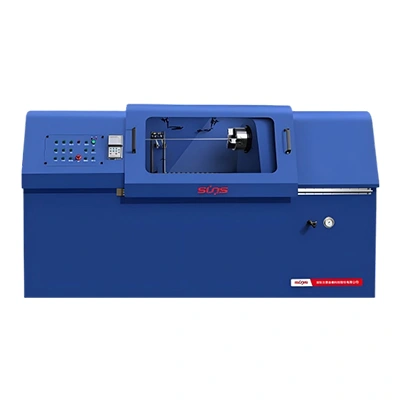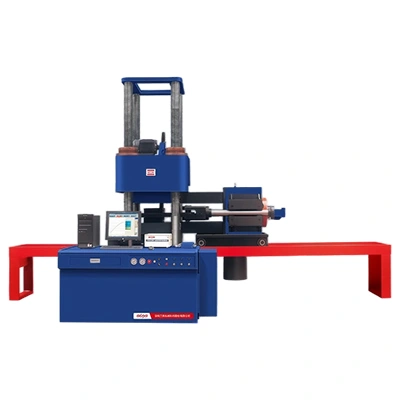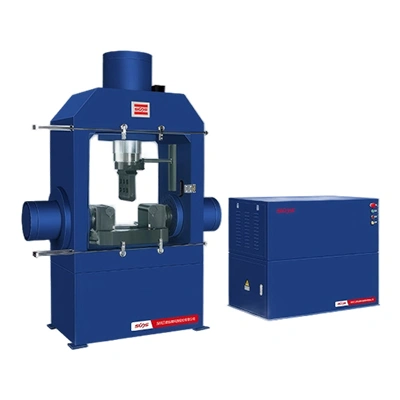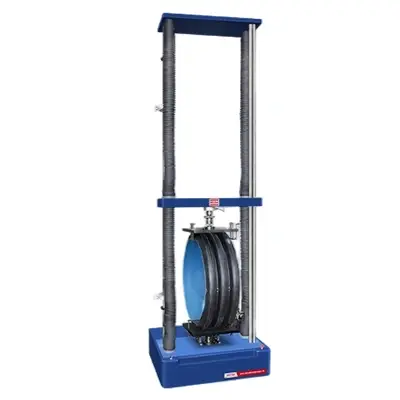
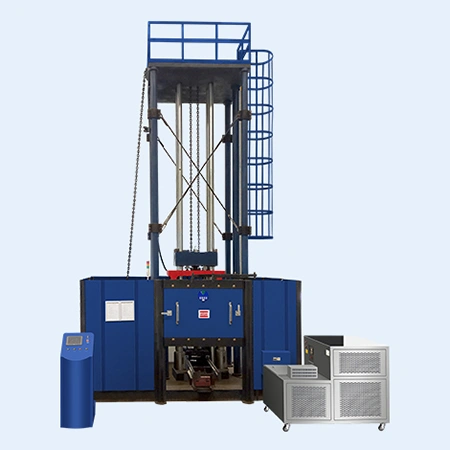
DWTT Series (8,000J-100,000J)
DWTT Drop Weight Tear Tester
- GB/T 8363, ASTM E436, API RP 5L3, EN 10274
DWTT drop weight tear testers are mainly used for ferritic steel plates and line-pipe steels to determine whether a crack will continue to grow after a sudden impact. During each test, a full-thickness notched specimen rests on two supports. It receives a blow on the side opposite the notch from a weight released at a set height. The control system records the applied impact energy for each test. Once the specimen breaks, the fracture surface is checked to determine the percentages of ductile shear and brittle cleavage. Results from specimens tested at several temperatures show when the fracture changes from mainly ductile shear to brittle cleavage. These impact testing systems are suitable for steel producers, pipe manufacturers, and testing laboratories that need fracture data for material qualification, production batch inspection, and research into crack propagation in pipeline steels.
| Model | | | | | |
| Max. Impact Energy | 30,000J | 40,000J | 50,000J | 80,000J | 100,000J |
| Min. Impact Energy | 8,000J | 10,000J | 15,000J | 26,000J | 32,000J |
| Striker Weight | 630kg | 800kg | 1,180kg | 2,140kg | 2,500kg |
| Striker Mass Error | ±0.5% | ||||
| Impact Height | 1,275–3,000mm | 1,275–2,800mm | 1,275–2,600mm | 1,275–2,805mm | 1,275–3,000mm |
| Impact Speed | 5m/s–7.67m/s | 5m/s–7.41m/s | 5m/s–7.14m/s | 5m/s–7.41m/s | 5m/s–7.67m/s |
| Height measurement resolution | ≤5mm | ||||
| Height measurement error | ≤10mm | ||||
| Striker Hardness | HRC58–62 | ||||
| Striker Radius | H25±0.1mm | ||||
| Anvils Hardness | HRC58–62 | ||||
| Anvils Radius | H20 OR R14.3±0.1mm | ||||
| Deviation between striker center and Anvils center | ≤1.5mm | ||||
| Support Span | 254±1.5mm | ||||
| Specimen Dimension | 305×76.2×(3-40)mm | ||||
| Frame Dimension(mm) | 1,900×1,300×5,100 | 2,300×1,550×5,200 | 3,300×3,600×5,700 | 3,300×3,600×6,700 | |
| Weight | 12,000kg | 15,000kg | 18,000kg | 20,000kg | |
| Power Supply | 3-phase, 5-line/380V ±10%/50Hz | ||||
| Power(kW) | 3kW | 5kW | |||
- The automatic system feeds and positions the specimen, lifts and releases the hammer, performs the impact, and then catches the drop weight.
- Servo-driven lifting controls the hammer height, while the Siemens PLC and touchscreen manage each stage and monitor operating conditions.
- Four sturdy columns and a solid steel base keep the tester stable when the hammer hits the specimen.
- To protect the operator throughout the test, a self-locking device secures the hammer if power is lost, the interlock prevents its release unless all safety conditions are met, and the fully enclosed guard contains broken specimen fragments while the alarm warns of faults.
- The recovery unit takes the broken specimen out of the test area and the buffer cylinders serve to cushion the drop assembly in order to reduce wear.