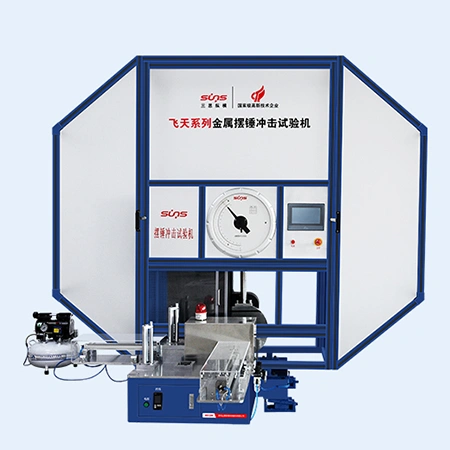
PTMS Series (150J-750J)
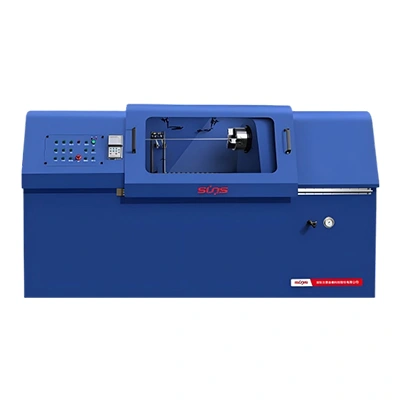
Pendulum Impact Testing Machine
- GB/T 3808, GB/T 12778, GB/T 229, GB/T 19748
- ASTM E23-22, ASTM E23-02a
- ISO 148-1
- JJG 145
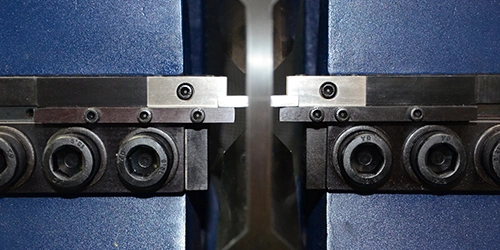
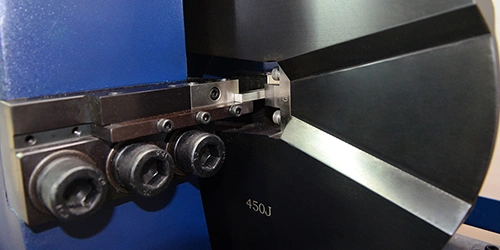
Pendulum impact testing machines, also called Charpy impact testers, measure how much energy a metal can take before breaking from a sudden blow (impact). During the test, a notched specimen rests horizontally on two supports while a weighted pendulum swings down and strikes it. The difference in the pendulum’s energy before and after the impact shows how much energy the sample absorbed and whether it shows ductile or brittle behavior. Our Charpy testers show absorbed energy (KV/KU), impact toughness, and pendulum angle in real time, and they can print test reports automatically. Specimens can be tested at temperatures ranging from room temperature down to −196°C to compare their impact performance under ambient and cryogenic conditions and identify changes in toughness as the material becomes colder.
| Model | Capacity | Torque (Impact constant: N.m) |
| | 150J | 80.3848 |
| | 300J | 160.7695 |
| | 450J | 241.1543 |
| | 600J | 321.5390 |
| | 750J | 401.9238 |
| Pendulum pre-swing angle | 150°±1° |
| Angle resolution | 0.025 |
| Distance from pendulum center to impact point (sample center) | 750mm |
| Impact velocity | 5.24m/s |
| Anvils span | 40mm |
| Anvils radius | 1–1.5mm |
| Sample support surface inclination | 11±1° |
| Impact knife/striker head radius | 2–2.5mm (GB standard), 8±0.05mm (ASTM standard) |
| Impact knife angle | 30±1° |
| Impact knife thickness | 12 mm |
| Sample size | 10mm (7.5mm/5mm/2.5mm) × 10mm × 55mm (T*W*H) |
| Test machine overall dimension | 960mm×735mm×1500mm |
| Test machine weight | Approximately 1000 kg |
| Main power supply | AC three-phase five-wire 380V±10% 50Hz 600W 10A |
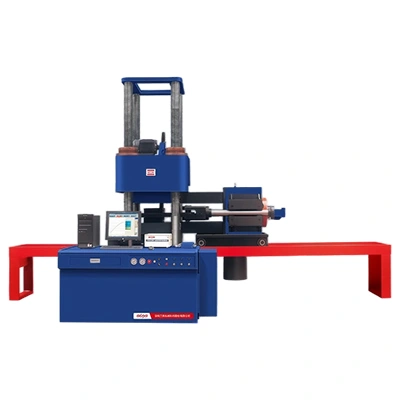
| Frame overall dimension | 2400mm×800mm×2200mm (without automatic sample feeding device). |
| Frame overall dimension | 2400×1980×2180mm (with automatic sample feeding device). |
- The pendulum impact tester has a patented mechanism which helps maintain stable operation when carrying out continuous and high-volume impact testing, a characteristic that means it is suitable for use in laboratories and production facilities handling large batches of specimens.
- Interchangeable pendulums cover impact energies from 150J to 750J, so the appropriate capacity can be selected for each material and test method.
- The pendulum can be released from the angle required by the test method, while the oscillographic measurement system captures impact data throughout the test for further analysis.
- Detachable anvils allow one operator to replace them quickly and shorten the time required to change the test setup.
- The automatic specimen centering aligns the notch with the pendulum striker according to the positioning requirements of ISO 148 and ASTM E23.
- The electronic safety interlock prevents the pendulum from being released if the access door is open, and the enclosed polycarbonate guard serves to contain the fragments in case the specimen breaks.
Pendulum impact testing machines are used for materials research, production quality control, and batch inspection in metallurgy, machinery manufacturing, automotive, and aerospace applications. Quality inspection organizations also use them to evaluate the impact properties of metals according to ISO 148 and ASTM E23.
- Carbon steel, alloy steel, high-strength steel, stainless steel, and shipbuilding steel
- Superalloys and nickel-based alloys
- Titanium alloys and aluminum alloys
- Special metal profiles and custom specimens